

Hearing Aid Solutions
Learn about the latest hearing aid technology, types, and brands we carry to find the perfect fit for your lifestyle.
Understanding Hearing Aids
A hearing aid is a small electronic device that you wear in or behind your ear. It makes some sounds louder so that a person with hearing loss can listen, communicate, and participate more fully in daily activities. A hearing aid has three basic parts: a microphone, an amplifier/processor, and a receiver (speaker).
The microphone picks up sounds from your environment and converts them into electrical signals. Modern hearing aids use multiple microphones to help distinguish speech from background noise, automatically adjusting to focus on the sounds that matter most to you.
The processor is the brain of the hearing aid. It analyzes, digitizes, and amplifies the electrical signals from the microphone. Today’s digital processors can distinguish between different types of sounds, reduce noise, enhance speech, and adjust automatically to different listening environments — all in real time.
The receiver converts the processed electrical signals back into sound and delivers them into your ear canal. The quality of the receiver directly impacts how natural and comfortable the amplified sounds feel, making it one of the most important components of a hearing aid.

Technology
Today’s hearing aids are sophisticated devices packed with features that go far beyond simple amplification.
Stream phone calls, music, podcasts, and TV audio directly to your hearing aids from your smartphone, tablet, or TV. Bluetooth hearing aids essentially turn your hearing devices into wireless earbuds, letting you enjoy clear, high-quality audio without any additional accessories. Many models also work with companion apps that give you direct control over volume, programs, and settings from your phone.
Advanced digital noise reduction technology analyzes the sounds around you in real time and reduces unwanted background noise — like the hum of a restaurant, traffic, or wind — while preserving and enhancing speech. This makes it significantly easier to follow conversations in noisy environments, which is one of the most common challenges for people with hearing loss.
Directional microphone systems use two or more microphones to determine where sounds are coming from. They can automatically focus on the speaker in front of you while reducing sounds from the sides and behind. This technology is especially helpful in group conversations, meetings, and busy social situations where you need to focus on one voice among many.
When you wear two hearing aids, they can communicate wirelessly with each other, sharing data about your sound environment. This ear-to-ear synchronization ensures balanced sound processing, meaning when you adjust the volume on one aid, the other adjusts too. This creates a more natural and immersive hearing experience, similar to how healthy ears work together.
Some of the latest hearing aids double as health tracking devices. They can monitor steps taken, physical activity, and even track social engagement (how many hours you spend in conversation). Certain models include fall detection and can send automatic alerts to designated contacts. These features transform hearing aids from simple amplification devices into comprehensive wellness tools.
Rechargeable hearing aids eliminate the hassle of changing tiny disposable batteries every few days. Simply place your hearing aids in their charging case overnight and wake up to a full day’s charge. Most rechargeable models provide 24+ hours of use on a single charge, and the charging cases are compact and portable enough to take anywhere.
Modern hearing aids use artificial intelligence (AI) to make listening easier and more natural in a wide variety of environments. AI-powered technology can automatically recognize different listening situations—such as conversations, background noise, music, or outdoor environments—and adjust the hearing aid settings in real time.
This intelligent processing helps improve speech clarity, reduce background noise, and enhance overall sound quality without requiring manual adjustments. Many AI-enabled hearing aids also learn from your listening preferences over time, allowing the devices to personalize sound based on your daily environments and lifestyle.
With AI technology, hearing aids are becoming smarter, more adaptive, and better at helping people stay connected to the conversations and sounds that matter most.
Styles & Fit
We offer a range of styles to fit your hearing needs, lifestyle, and preferences. Your audiologist will help you choose the best option.
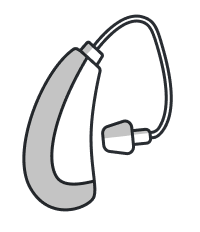
The BTE hearing aid sits comfortably behind the ear with a custom-fitted ear mold or thin tube that directs sound into the ear canal. BTEs are suitable for nearly all types of hearing loss, from mild to profound. They are durable, easy to handle, and can accommodate larger batteries for longer life. BTE aids are often recommended for children because the ear molds can be replaced as the child grows, while the hearing aid itself remains the same.
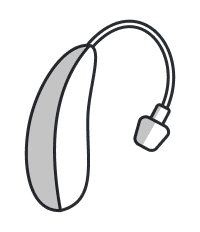
Similar to BTE hearing aids but smaller and more discreet. The receiver (speaker) is placed directly inside the ear canal rather than in the housing behind the ear. This design provides a more natural sound quality and reduces the “plugged up” feeling some wearers experience. RIC aids are the most popular style today due to their combination of comfort, discretion, and excellent sound quality. Ideal for mild to severe hearing loss.
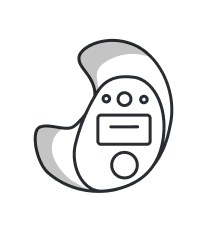
Custom-molded to fit within the outer portion of the ear, ITE hearing aids are easy to insert and remove. They can house larger batteries and more features than smaller in-canal styles. ITEs are appropriate for mild to severe hearing loss and are a popular choice for those who want easy handling without the behind-the-ear component. Each ITE is custom-made from an impression of your ear for a perfect fit.
A variation of the BTE design that keeps the ear canal open using a thin tube and a small, non-occluding tip. This allows low-frequency sounds to enter the ear naturally while the hearing aid amplifies high-frequency sounds. Open-fit aids are comfortable, reduce the sensation of hearing your own voice too loudly, and are ideal for mild to moderate high-frequency hearing loss.
ITC hearing aids fit partly in the ear canal, while CIC models fit entirely inside the canal — making them nearly invisible. These custom-molded devices are ideal for people who want maximum discretion. CIC aids are best suited for mild to moderate hearing loss. Due to their small size, they use smaller batteries and may have fewer features, but they offer excellent cosmetic appeal.
Extended-wear hearing aids are placed deep in the ear canal by your audiologist and can be worn continuously for weeks or even months at a time — including while sleeping, showering, and exercising. They are completely invisible to others. Because they sit close to the eardrum, they provide natural sound quality and require no daily insertion or removal. A great option for those who want a “set it and forget it” solution.
Top Brands
We work with leading manufacturers to ensure you have access to the best hearing technology available.
A pioneer in smart hearing technology, ReSound was the first to introduce direct Bluetooth streaming to hearing aids. Known for natural sound quality and their innovative Smart 3D app that gives users fine-tuned control over their listening experience. Their ReSound ONE model delivers a personalized hearing experience with an additional microphone placed inside the ear canal.
One of the world’s most trusted hearing aid brands, Phonak is known for exceptional speech understanding in noise, universal Bluetooth connectivity (works with any phone), and rechargeable technology. Their Paradise and Lumity platforms offer outstanding sound quality, motion sensors that adapt to your activities, and the ability to connect to Roger microphones for challenging listening situations.
Widex hearing aids are renowned for their pure, natural sound quality. They were the first to introduce machine learning into hearing aids with their SoundSense Learn feature, which uses AI to create personalized sound settings based on your preferences. Widex is also a leader in tinnitus management with their unique Zen therapy program built into their hearing aids.
An American company known for innovation, Starkey was the first to integrate health monitoring features like fall detection, step counting, and brain health tracking into hearing aids. Their Evolv AI and Genesis AI platforms use artificial intelligence to deliver up to 55 million automatic adjustments per hour, ensuring optimal sound in every environment.
Signia excels at preserving the natural sound of your own voice with their Own Voice Processing (OVP) technology. Their Active and IX platforms offer sleek, modern designs with powerful performance. Signia also leads in telehealth capabilities, allowing your audiologist to make remote adjustments to your hearing aids from anywhere.
Oticon takes a brain-first approach to hearing, developing technology based on BrainHearing research. Their Real and Intent platforms use deep neural network (DNN) technology trained on 12 million real-life sound scenes to give your brain access to the full sound scene rather than just focusing on one speaker. This approach reduces listening effort and supports cognitive health.
Verification & Fit
Short answer: Real-ear measurement (REM) is a probe-microphone check of the sound your hearing aids deliver in your ears. A thin microphone tube measures the output while you wear the devices. Your audiologist compares those measurements with prescriptive targets and your hearing test, then can adjust the programming for a more individualized fit.
The reason this matters is that every ear canal has its own size, shape, and resonance. A setting that looks appropriate in software or a test box may not produce the same result in a person’s ear. REM helps verify the fitting at speech frequencies and at more than one loudness level, so the clinician can consider both audibility and comfort.
During the measurement, the equipment presents calibrated sound or speech-like signals while the hearing aids operate. The audiologist reviews the response against the prescribed targets and makes programming changes when needed. The process may also help verify how features such as directionality or noise reduction behave in the real ear. It is a fitting-verification tool, not a promise of a specific hearing outcome.
REM is different from checking a hearing aid only in a test box or relying on default manufacturer settings. Those approaches can tell a clinician useful things about the device, but they do not show exactly how the sound reaches one patient’s ear. A REM session can be repeated after programming changes or when a patient reports that sound is too soft, too loud, or uncomfortable. The measurements help the audiologist make informed adjustments while keeping the patient’s hearing test, listening goals, and comfort in view. REM does not replace counseling or follow-up; it supports those parts of the fitting process.
Hinderliter’s hearing-aid care page already describes custom programming with real-ear verification measurements. To understand the broader process, review the hearing-aid fitting service and diagnostic hearing evaluation information, then contact the Birmingham office to discuss whether REM is appropriate for your fitting. The American Speech-Language-Hearing Association overview of adult hearing aids explains the measurement in more detail.
Choosing Hearing Aids
Short answer: Compare the complete care plan, not only the device price. Ask what is included for the hearing evaluation, professional fitting, real-ear verification, trial period, follow-up adjustments, maintenance, repairs, and warranty support.
Hearing-aid pricing varies with the technology level and the patient’s hearing and listening needs. Two quotes may look different because one includes more professional care or follow-up. Ask for the device, services, trial terms, and warranty boundaries to be listed clearly before you decide. The FDA guide to getting hearing aids recommends asking about cost, trial periods, warranties, and services. ASHA’s adult hearing-aid guidance explains the role of evaluation, fitting, verification, and follow-up.
At Hinderliter Hearing Services, the fitting process includes real-ear measurement, follow-up visits, and ongoing care. The right quote depends on your hearing evaluation and selected technology, so a one-size-fits-all number would not tell the whole story. Review the hearing-aid fitting service, then contact the Birmingham office for a current quote based on your needs.
How We Help
From your first appointment through years of follow-up care, we’re with you every step of the way.
Your hearing journey starts with a phone call or online inquiry. Our friendly staff will schedule your appointment, answer any initial questions, and ensure you know what to expect during your visit. We take time to understand your concerns, lifestyle, and hearing goals before any testing begins.
We perform thorough diagnostic hearing evaluations using state-of-the-art equipment. Tests include pure-tone audiometry, speech-in-noise testing, tympanometry, and other assessments as needed. The results give us a complete picture of your hearing health and help us determine the best treatment options.
Based on your test results, our audiologists take time to explain your hearing profile in detail. We discuss all available options, demonstrate different hearing aid styles, and make recommendations tailored to your specific hearing loss, lifestyle needs, and budget. We never rush this process.
Once you’ve selected your hearing aids, we custom-program them using real-ear verification measurements to ensure they’re providing exactly the right amount of amplification for your specific hearing loss. Follow-up appointments allow us to fine-tune your settings as you adjust to hearing new sounds again.
We provide professional cleaning, maintenance, and repair services for all hearing aid brands. Many minor repairs can be completed in-office the same day. For more extensive repairs, we work directly with manufacturers to ensure quick turnaround. Regular maintenance visits help extend the life of your hearing aids and ensure optimal performance.
Our care doesn’t end when you walk out the door with your hearing aids. We schedule regular follow-up appointments to check your progress, make adjustments, and address any concerns. Our patients are always welcome to call or stop by with questions — building a lasting relationship is central to how we practice.
What to Expect
New hearing aids can make familiar sounds seem louder or different at first. Your audiologist can help you set expectations for amplification, comfort, and communication as you get used to the devices.
The pace varies from person to person. During the first several weeks, you may notice sounds you had not heard clearly in a while, such as a refrigerator, birds, clothing, or your own voice. The National Institute on Deafness and Other Communication Disorders recommends regular use and working with your audiologist while you adjust.
Wear your hearing aids according to your audiologist’s guidance. Start with listening situations that feel manageable, then discuss more complex environments as you become comfortable. Keep brief notes about comfort, loudness, speech understanding, feedback, phone or streaming use, and questions for your next visit.
Follow-up is the right place to review those notes and request fine-tuning. Ask your audiologist about persistent discomfort, feedback, or settings concerns rather than changing settings or attempting repairs yourself. ASHA’s adult hearing-aid guidance describes counseling, wearing schedules, follow-up, and ongoing modification as part of hearing-aid care.
DISTINCTIVE_STRING: HEARING_AID_FIRST_30_DAYS_2026

Tinnitus Relief
Yes — hearing aids are one of the most effective tools for managing tinnitus. Many people with tinnitus also have some degree of hearing loss, and by amplifying external sounds, hearing aids help mask or reduce the perception of tinnitus (the ringing, buzzing, or hissing in your ears).
Many modern hearing aids include built-in tinnitus masking features that generate soothing sounds — such as white noise, ocean waves, or other ambient sounds — directly into your ears. These sounds can provide significant relief and make tinnitus much less noticeable throughout the day.
Brands like Widex, ReSound, and Signia offer sophisticated tinnitus management programs within their hearing aids. During your consultation, we’ll assess your tinnitus and hearing loss together to recommend the best combination of amplification and sound therapy for your needs.
Learn More About Tinnitus TreatmentLongevity
On average, hearing aids last 3 to 5 years with proper care and maintenance. Several factors affect their lifespan, including how well they’re maintained, your body chemistry (earwax and moisture levels), how often they’re worn, and the environment they’re used in.
Regular professional cleaning and maintenance appointments can significantly extend the life of your hearing aids. We recommend coming in every 3–6 months for a professional check-up where we deep-clean your devices, check all components, and make any needed adjustments.
Even if your hearing aids are still functioning well after 5 years, hearing aid technology advances rapidly. Newer models often offer significantly improved sound processing, better noise reduction, more comfortable fits, and features like Bluetooth connectivity and health monitoring that weren’t available just a few years ago.
When it’s time to upgrade, we’ll help you evaluate the latest options and find the best solution for your current hearing needs and lifestyle.
Schedule a consultation with our experienced team to find the perfect hearing aids for your needs.
There is no single best hearing aid brand. The best hearing aid is the one that matches the patient's hearing loss, lifestyle, dexterity, and budget. Hinderliter Hearing Services in Birmingham, MI is independent and fits Phonak, Oticon, Widex, Starkey, ReSound, and Signia hearing aids so the recommendation is based on patient needs.
Most modern hearing aids last five to seven years with proper care. Daily cleaning, regular professional maintenance, and avoiding moisture extend the life of the devices. Hinderliter Hearing Services in Birmingham, MI includes follow-up care and maintenance in every hearing aid fitting.
Rechargeable hearing aids are easier to use for most patients because there are no tiny batteries to change. They provide 24 hours or more of use on a single charge. Patients with very dexterous fingers and a strong preference for the lowest upfront cost may still prefer disposable batteries.
Yes, in many cases. Most modern hearing aids include a tinnitus masker that plays a soft, customizable sound to reduce the perception of ringing. Hinderliter Hearing Services in Birmingham, MI evaluates tinnitus during the full diagnostic exam and can recommend hearing aids with built-in tinnitus support.
Yes. Michigan law requires a trial period for every hearing aid purchase. Hinderliter Hearing Services in Birmingham, MI provides a 45-day trial on every new fitting so the patient can confirm benefit in real-world listening situations before the purchase is final.
A hearing-aid fitting is a step-by-step process. The audiologist checks the devices, programs them to your hearing test, confirms the fit and comfort, and uses real-ear measurements when appropriate to verify the settings in your ears. You also learn how to insert, remove, charge, clean, and use your hearing aids. Follow-up visits allow fine-tuning as you adjust to new sounds.
Hearing aid pricing in Michigan varies by technology level. Entry-level digital hearing aids start lower; premium hearing aids with rechargeable batteries, Bluetooth streaming, and advanced noise reduction cost more. Hinderliter Hearing Services bundles real-ear measurement, follow-up visits, and ongoing care into every fitting.
Insurance coverage for hearing aids varies. Some plans include a hearing aid allowance, some cover the diagnostic exam only, and some have no hearing benefit. Hinderliter Hearing Services in Birmingham, MI verifies hearing benefits before every appointment. Call (248) 430-4416 with the insurance card on hand.
Common signs include asking people to repeat themselves, turning the TV up louder than others prefer, struggling in restaurants or group settings, and ringing in the ears. A diagnostic hearing evaluation at Hinderliter Hearing Services in Birmingham, MI confirms whether hearing aids are the right step.
Over-the-counter hearing aids are intended for adults 18 and older with perceived mild to moderate hearing loss and can be purchased without a prescription. Prescription hearing aids are provided through a licensed hearing professional and can be programmed to a person's hearing loss; they may be appropriate for a wider range of hearing loss and ages. A diagnostic hearing evaluation helps determine which option fits your needs.
Talk with a doctor or hearing professional if hearing changes suddenly, is worse in one ear, you have one-sided ringing, ear pain or drainage, vertigo, or trouble hearing speech even in a quiet room. OTC hearing aids are intended for perceived mild to moderate hearing loss in adults, not severe or profound hearing loss. Hinderliter Hearing Services can start with a diagnostic hearing evaluation in Birmingham, MI.
Real-ear measurement, also called probe-microphone measurement, uses a small microphone tube in the ear canal to measure the sound delivered by a hearing aid while you wear it. The audiologist compares the measured output with prescriptive targets and accounts for the shape and acoustics of your individual ear. This helps verify that the programmed fitting is based on your hearing needs, not only on factory settings. ASHA’s adult hearing-aid guidance provides the technical background.
Real-ear measurement helps verify hearing-aid output across speech frequencies and different input levels, including soft, average, and loud sounds. The results can guide adjustments for speech audibility, comfort, and the way features work in your ears. It is one part of a personalized fitting and does not guarantee a particular outcome. Read the ASHA explanation of real-ear measures.
Compare the technology level, the hearing evaluation, professional fitting and verification, trial terms, follow-up adjustments, repairs, warranty boundaries, and ongoing care. A lower device price may not include the same services, so ask for the full care plan in writing. Hinderliter Hearing Services explains the fitting process before you choose and includes real-ear measurement, follow-up visits, and ongoing care with every fitting. See the FDA guide to hearing aids and ASHA adult hearing-aid guidance for questions to ask. FDA hearing-aid guidance and ASHA adult hearing-aid guidance provide additional questions to discuss.
The total cost can include the devices and the professional care around them, such as the hearing evaluation, fitting, programming, real-ear verification, trial period, follow-up adjustments, maintenance, and repair or warranty support. The exact price depends on the technology and your hearing needs. Hinderliter Hearing Services does not publish a one-size-fits-all price because a quote should reflect your evaluation and selected technology. Contact the Birmingham office for a current quote. FDA hearing-aid guidance and ASHA adult hearing-aid guidance provide additional questions to discuss.
The first 30 days can include an adjustment period as you get used to amplified sound, your own voice, comfort, and different listening environments. The pace varies. Wear the devices according to your audiologist’s guidance, note situations that are too loud or uncomfortable, and bring those notes to follow-up. Ask your audiologist about persistent discomfort, feedback, or settings concerns rather than changing settings or attempting repairs yourself. NIDCD hearing-aid guidance and ASHA adult hearing-aid guidance provide patient education context.
Patient education sources: FDA guidance on OTC hearing aids and NIDCD hearing-aid information.
DISTINCTIVE_STRING: Medicare.gov hearing-aid coverage guidance
Coverage sources: Medicare hearing-aid coverage and Medicare hearing and balance exams. Plan benefits can vary, so confirm current coverage with Medicare or the specific plan.
Original Medicare does not cover hearing aids or exams for fitting hearing aids, so beneficiaries pay those costs. Some Medicare Advantage plans may offer extra hearing benefits, so check the specific plan for coverage, network rules, and costs.
Medicare Part B may cover diagnostic hearing and balance exams when a doctor or other health care provider orders them to determine whether medical treatment is needed. Original Medicare does not cover routine exams for fitting hearing aids.
Many Medicare Advantage plans include hearing benefits, but the amount and the network rules vary. We can help you confirm whether your plan includes benefits and what steps are required.
We see patients with many insurance plans. Benefits vary widely, so the best next step is to call us with your insurance information so we can check what applies to your visit.
Yes. If your plan reimburses for hearing care, we can provide the paperwork you may need. Just let us know what your insurer is asking for.